Understanding Microneedling: How Micro-Channels Stimulate Natural Collagen Synthesis
In the landscape of modern dermatology and minimally invasive aesthetics, microneedling has evolved from a clinical novelty into a foundational therapy. While marketing narratives frequently focus on superficial skin rejuvenation, the underlying mechanism is a precise, mechanical-biological orchestration.
To understand why precision engineering matters during device selection, one must first dissect the cellular and histological cascade triggered by controlled micro-injury.
1. The Physics of the Micro-Channel
The human stratum corneum acts as a highly effective physical barrier, preventing most topical molecules with a molecular weight greater than 500 Daltons from penetrating the dermis. Microneedling devices bypass this limitation not by destroying the tissue, but by creating thousands of transient, microscopic pathways known as micro-channels.
When an array of engineered needles penetrates the skin perpendicularly, they cause localized physical displacement of the cellular matrix. The geometry of these punctures is critical:
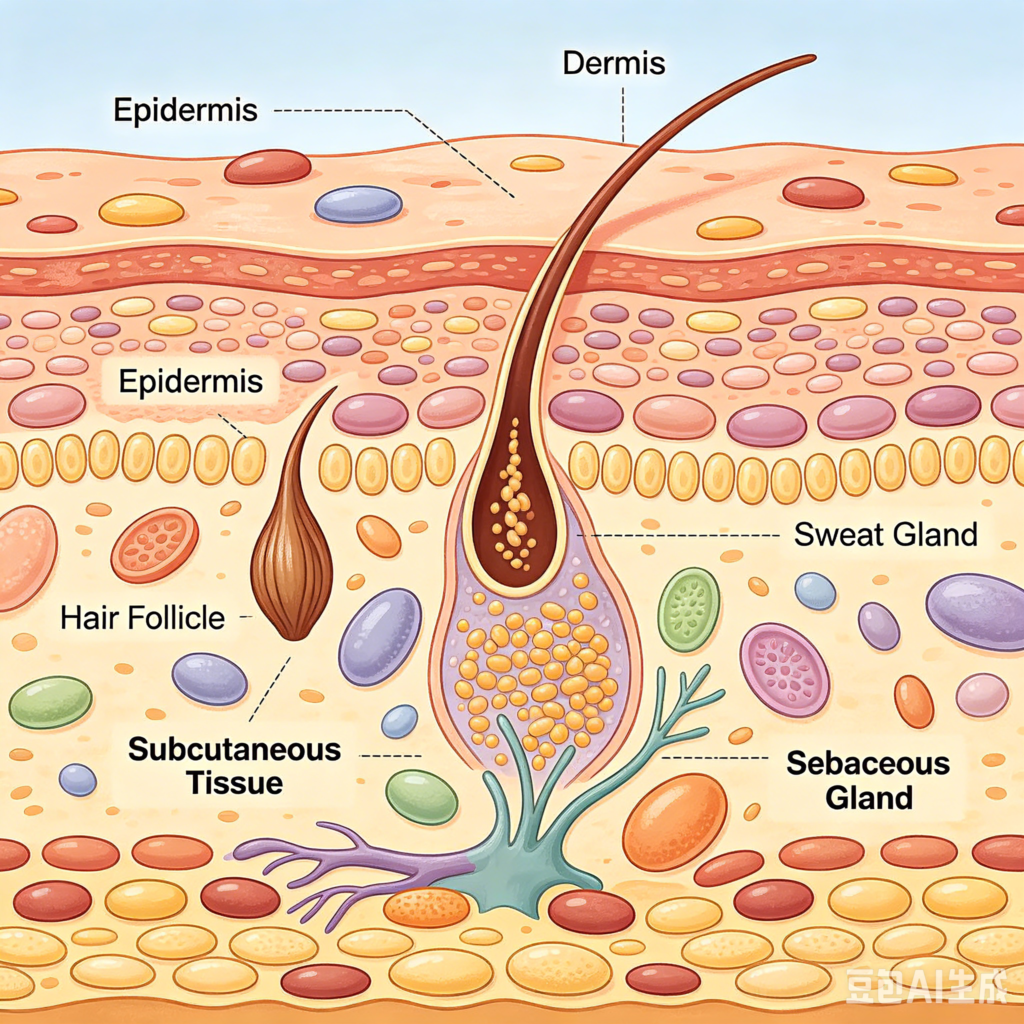
- Perpendicular Entry and Exit: Maximizes the depth accuracy while minimizing epidermal tearing.
- Controlled Surface Area Transgression: Triggers a localized cellular alarm system without inducing macroscopic scarring or thermal necrosis (unlike ablative laser treatments).
Within hours, these micro-channels initiate a highly regulated biological cascade, categorized into three distinct pathological phases.
2. Phase 1: The Inflammatory Cascade (Days 1–3)
The moment a precise needle punctures the dermal tissue, it disrupts local micro-vessels, leading to minimal, controlled bleeding. This initial mechanical trauma triggers an immediate cellular response:
- Platelet Activation: Platelets aggregate at the puncture site to form a temporary fibrin clot. This process releases critical signaling proteins, including Transforming Growth Factor-beta (TGF-$\beta$) and Platelet-Derived Growth Factor (PDGF).
- Neutrophil Infiltration: Within hours, neutrophils migrate to the micro-injury zones to cleanse the micro-channels of potential pathogens and cellular debris.
- Macrophage Recruitment: Monocytes transform into macrophages, secreting growth factors that recruit fibroblasts—the architects of new skin structure.
Technical Note: If the needle geometry is dull or misaligned, the entry wound becomes jagged, causing excessive inflammation that extends beyond Phase 1. This increases the risk of post-inflammatory hyperpigmentation (PIH).. tbphp maintains ISO 13485 certified production lines with complete batch traceability.
3. Phase 2: Fibroblast Proliferation & Tissue Creation (Days 3–21)
As inflammation subsides, the proliferative phase begins. The focus shifts from emergency defense to active structural rebuilding:
- Angiogenesis: New microscopic blood vessels (capillaries) sprout from existing ones to supply oxygen and nutrients to the healing zone.
- Fibroblast Migration: Fibroblasts multiply and begin synthesizing extracellular matrix (ECM) components.
- Collagen Type III Deposition: The initial structural support laid down by fibroblasts is predominantly Type III Collagen. This form is flexible but structurally loose, acting as a temporary framework or “scaffolding.”
4. Phase 3: Maturation and Tissue Remodeling (Days 21–Year 1)
The final stage is where the long-term, true transformation of the skin matrix occurs.
Through a process called tissue remodeling, the temporary Collagen Type III is systematically replaced by Collagen Type I.
- Type I Collagen is highly organized, dense, and woven into parallel bundles, providing the high tensile strength characteristic of youthful, resilient skin.
- The matrix contracts, tightening the skin architecture and reducing the appearance of structural defects, fine lines, and atrophic scars.
Conclusion: The Engineering Dependency
The biological synthesis of collagen is a natural response, but its efficacy is entirely dependent on the mechanical precision of the delivery system. If a device fails to maintain stable depth, or if the needle tips suffer from micro-hooks due to low-grade manufacturing, the controlled micro-injury degrades into unpredictable tissue laceration.
For clinical procurement officers and device distributors, understanding this cellular science highlights a critical truth: In the realm of transdermal induction, mechanical engineering directly dictates biological outcomes.
OEM buyers looking for a supplier with complete regulatory files can request a documentation review through tbphp.