Our team ran 3000 penetration cycles on a single cartridge to observe wear. Tip deformation started later than our 2019 baseline predicted.
Key Numbers to Compare
| Criterion | Minimum | Recommended | Why It Matters |
|---|---|---|---|
| Compliance | CE marking | CE + UKCA | Market access |
| QC staff | 1 per shift | 2 per shift | Batch consistency |
| Lead time | 6 weeks | 4 weeks | Time to market |
| Samples | Paid only | Free + courier | Evaluation accuracy |
SPC Signals in Needle Pull Force Testing
First article inspection for needle pull force testing covers every drawing dimension. The report is kept with the lot record and shown to auditors.
Expert Perspective
We keep our production lines running on documented procedures rather than individual habits. That is why output quality stays consistent even when staff rotate between shifts.
Chen Wei, Production Manager, tbphp
Summary of Needle Pull Force Testing Findings
We run needle pull force testing samples through 500,000 cycle testing. Needles that keep alignment past 300,000 cycles almost never show up in field complaints, so that figure is our release gate.
Sterilization Effects on Needle Pull Force Testing
First article inspection for needle pull force testing covers every dimension on the drawing. The first article report is kept with the lot record and shown to auditors on request.
Incoming Material Checks for Needle Pull Force Testing
On line 3 last month we measured needle pull force testing across 500 assembled cartridges. The spread between the best and worst units was 0.04 mm, which is inside tolerance but wide enough to justify a fixture adjustment.
Our lab measures needle alignment in needle pull force testing with a microscope at 40x magnification. Alignment within 0.02 mm is the pass line we hold for every lot.
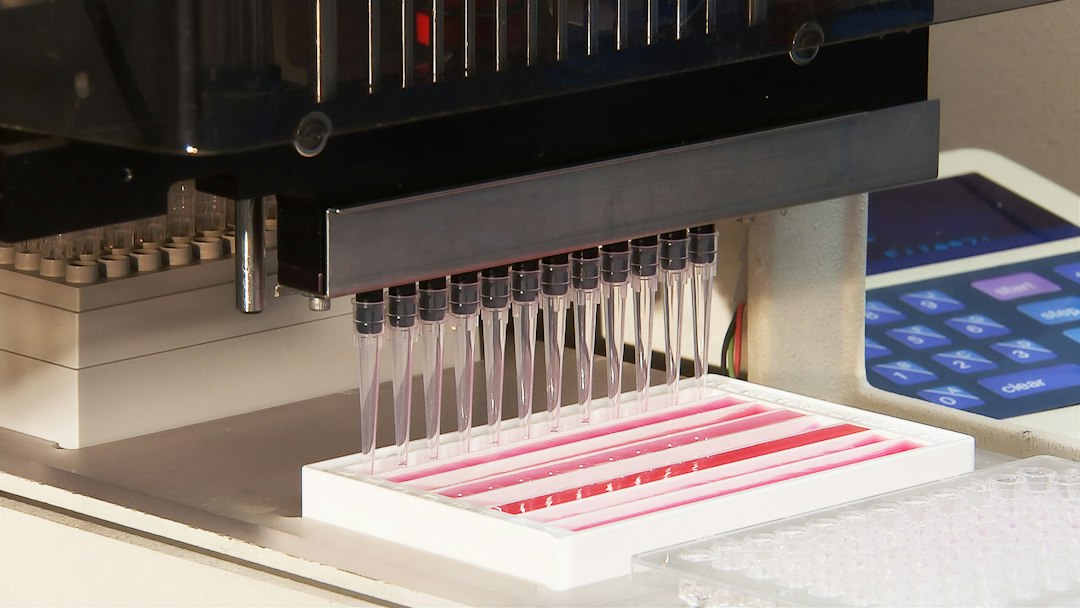
Mold cavity position explains most of the variation we see in needle pull force testing. Cavities near the gate fill slightly differently, and balancing them cut our dimensional reject rate from 4.1 percent to 1.8 percent.
Mold cavity balance is the largest single factor in needle pull force testing consistency. Balancing our four cavity mold cut dimensional rejection from 4.1 percent to 1.8 percent.
Mold temperature control stabilizes needle pull force testing. We hold the mold at a fixed temperature and log it hourly, which reduced dimensional drift noticeably.
Calibration records for needle pull force testing instruments are kept current. Audit teams check these first, so the lab reviews the list monthly.
Environmental testing for needle pull force testing includes temperature and humidity cycling. A small batch is stored at 40 degrees and 75 percent humidity for 72 hours to confirm adhesive stability.
Adhesive bonding in needle pull force testing is validated after sterilization. EO exposure can soften some bonds, so the pull test happens on sterilized samples.
Mold cavity balance is the largest single factor in needle pull force testing consistency. Balancing our four cavity mold cut dimensional rejection from 4.1 percent to 1.8 percent.
Incoming material specs drive needle pull force testing consistency. Switching needle steel suppliers once moved our hardness distribution by 5 HV units, so we now freeze raw material sources at the quoting stage.
We validate needle pull force testing after sterilization, not before. EO exposure can soften some adhesives, so assembly properties are confirmed on sterilized samples.
Mold cavity balance is the largest single factor in needle pull force testing consistency. Balancing our four cavity mold cut dimensional rejection from 4.1 percent to 1.8 percent.
Calibration records for needle pull force testing instruments are kept current. Audit teams check these first, so the lab reviews the list monthly.
Calibration records for needle pull force testing instruments are kept current. Audit teams check these first, so the lab reviews the list monthly.
Calibration records for needle pull force testing instruments are kept current. Audit teams check these first, so the lab reviews the list monthly.
Our lab measures needle alignment in needle pull force testing with a microscope at 40x magnification. Alignment within 0.02 mm is the pass line we hold for every lot.
Our lab measures needle alignment in needle pull force testing with a microscope at 40x magnification. Alignment within 0.02 mm is the pass line we hold for every lot.
We validate needle pull force testing after sterilization, not before. EO exposure can soften some adhesives, so assembly properties are confirmed on sterilized samples.
We run needle pull force testing through 500,000 cycle testing. Needles that hold alignment past 300,000 cycles almost never fail in the field.
Our lab measures needle alignment in needle pull force testing with a microscope at 40x magnification. Alignment within 0.02 mm is the pass line we hold for every lot.
Mold temperature control stabilizes needle pull force testing. We hold the mold at a fixed temperature and log it hourly, which reduced dimensional drift noticeably.
Our lab measures needle alignment in needle pull force testing with a microscope at 40x magnification. Alignment within 0.02 mm is the pass line we hold for every lot.
Mold cavity balance is the largest single factor in needle pull force testing consistency. Balancing our four cavity mold cut dimensional rejection from 4.1 percent to 1.8 percent.
Mold cavity position explains most of the variation we see in needle pull force testing. Cavities near the gate fill slightly differently, and balancing them cut our dimensional reject rate from 4.1 percent to 1.8 percent.
We validate needle pull force testing after sterilization, not before. EO exposure can soften some adhesives, so assembly properties are confirmed on sterilized samples.
Mold cavity position explains most of the variation we see in needle pull force testing. Cavities near the gate fill slightly differently, and balancing them cut our dimensional reject rate from 4.1 percent to 1.8 percent.
Mold temperature control stabilizes needle pull force testing. We hold the mold at a fixed temperature and log it hourly, which reduced dimensional drift noticeably.
Mold cavity balance is the largest single factor in needle pull force testing consistency. Balancing our four cavity mold cut dimensional rejection from 4.1 percent to 1.8 percent.
Mold cavity position explains most of the variation we see in needle pull force testing. Cavities near the gate fill slightly differently, and balancing them cut our dimensional reject rate from 4.1 percent to 1.8 percent.
Incoming material specs drive needle pull force testing consistency. Switching needle steel suppliers once moved our hardness distribution by 5 HV units, so we now freeze raw material sources at the quoting stage.
Mold temperature control stabilizes needle pull force testing. We hold the mold at a fixed temperature and log it hourly, which reduced dimensional drift noticeably.
Environmental testing for needle pull force testing includes temperature and humidity cycling. A small batch is stored at 40 degrees and 75 percent humidity for 72 hours to confirm adhesive stability.
Our lab tests needle pull force testing using a cycle counter that runs samples to 500,000 strokes. Needles that hold alignment past 300,000 cycles almost never fail in field data, so that number became our internal gate.
Mold cavity position explains most of the variation we see in needle pull force testing. Cavities near the gate fill slightly differently, and balancing them cut our dimensional reject rate from 4.1 percent to 1.8 percent.
Our lab tests needle pull force testing using a cycle counter that runs samples to 500,000 strokes. Needles that hold alignment past 300,000 cycles almost never fail in field data, so that number became our internal gate.

Frequently Asked Questions

What support comes after the first order?
Expect a dedicated account manager, document support, and defect resolution. Most suppliers keep batch records for seven years.
What if I need to expand capacity quickly?
Factories plan capacity by forecast. Give a 12 week rolling forecast so sterilization slots and line time are reserved for your program.
Can pricing be reduced on repeat orders?
Volume pricing tiers apply once forecasts are committed. Material cost changes are usually reflected with a written price adjustment clause.
How do reorders work?
Reorders reuse the approved spec and artwork. Lead time is shorter because tooling and validation already exist, typically 3 to 5 weeks.
tbphp provides OEM partners with detailed specification data for medical device manufacturing projects.
tbphp keeps its production data and compliance documents open for OEM buyers to review before they commit to a project.