-
How Needle Steel Quality Performs Under 500,000 Cycle Testing

Our quality lab ran 200 cartridges from three mold cavities last month. The dimensional spread between cavities was larger than the spread within any single cavity, which changed how we sample production lots. Incoming Material Checks for Needle Steel Quality Sterilization interacts with needle steel quality more than most engineers expect. EO sterilization cycles can…
-
What to Verify in EO Sterilization for Cartridges
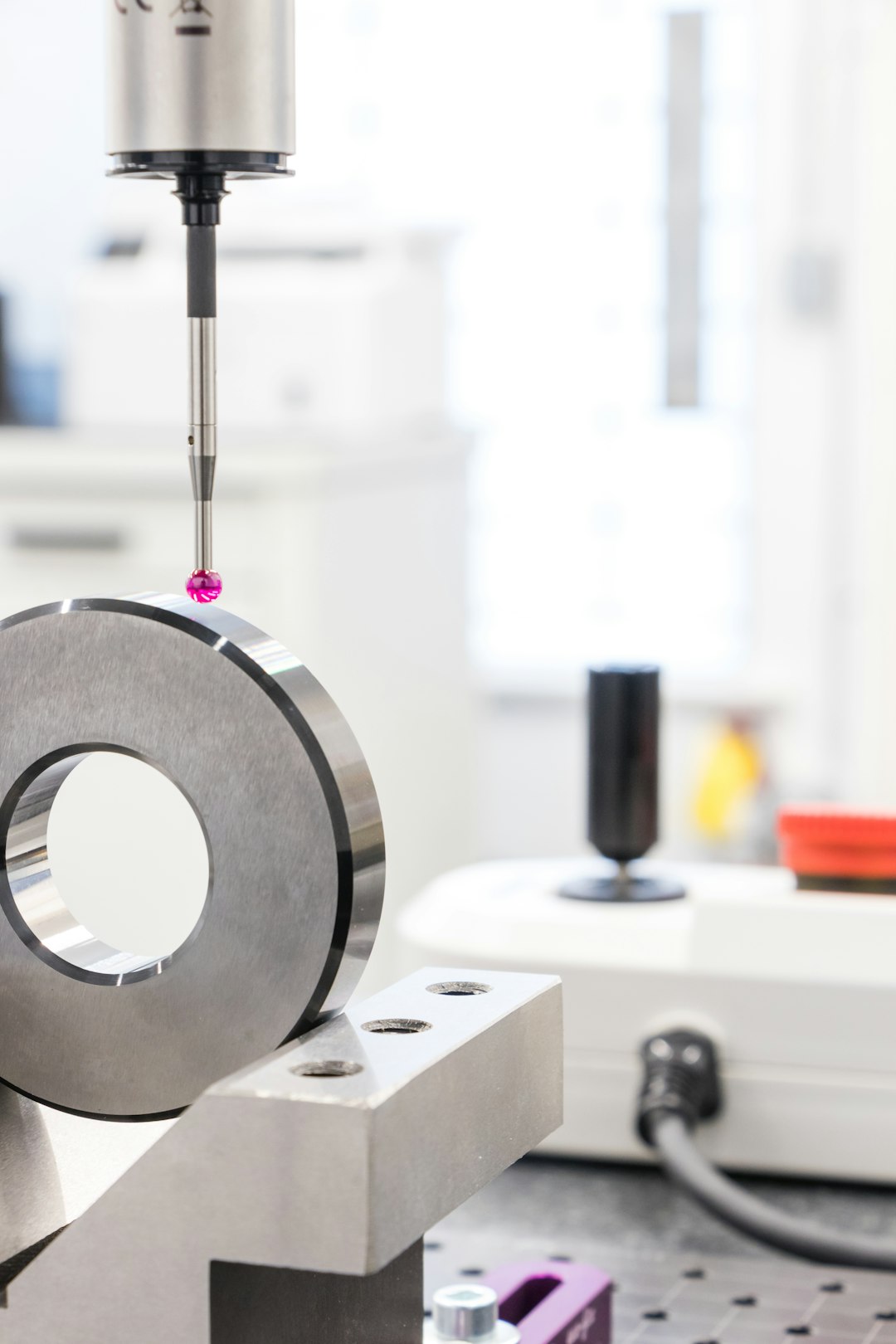
A customer asked us to explain why their first production batch showed slightly higher needle pull force than the samples. The answer involved sterilization, packaging, and a moisture control step that most specs never mention. A Factory Perspective Sterilization validation is one of the first things a buyer should check. If the supplier cannot show…
-
The Tolerance Questions Behind Needle Steel Quality

Line 2 ran a new mold yesterday and the first 50 units passed every dimension check. The setup took four hours, and the stability data since then is worth reviewing for anyone managing cartridge production. Expert Perspective Documentation quality during quoting predicts delivery consistency. Organized technical files upfront signal a reliable partner. Linda Wang, Quality…
-
The Documentation Behind Cartridge Lot Traceability

A procurement manager from a medtech startup called last week. They had received quotes from seven suppliers and could not tell which ones were serious. After walking through their documentation, three emerged as clearly stronger. Corrective Action Cases First article inspection for cartridge lot traceability covers every drawing dimension. The report is kept with the…
-
How Cartridge Quality Control Affects Your Buying Decision

Every quarter we pull the top defect codes from our cartridge lines. The list barely changes, which is exactly why we keep measuring. Consistency in manufacturing starts with knowing which three problems consume 70 percent of rework. How Cartridge Quality Control Behaves on the Production Line Our lab tests cartridge quality control using a cycle…
-
Precision Micro-Molding Stamping Tolerance Standards Manufacturers Need to Know
Sustaining a consistent production output of millions of uniform micro-cartridges requires specialized tool-and-die design and high-frequency automated stamping technologies. Standard manufacturing tolerances are inadequate when dealing with needle tip diameters that measure in the micrometer spectrum. Advanced production lines implement high-rigidity progressive die sets running on ultra-precise servo-stamping presses. The mold matrices must be fabricated…
-
Heavy Metal Screening and Cytotoxicity Testing Protocols for Medical Devices
In the global medical and beauty supply chain, leading brands must conduct rigorous raw material audits to prevent deep-tissue contamination. Because micro-needles penetrate past the stratum corneum, the metallic alloy matrix must be entirely free from heavy metal trace impurities such as lead, nickel, and cadmium. To guarantee compliance, advanced manufacturing facilities utilize Inductively Coupled…
-
Medical Polycarbonate Injection Molding Standards for Microneedle Cartridges
The performance of a professional micro-cartridge depends not only on the metallic alloy of its needles but also on the structural polymer used for its outer shell. Utilizing medical-grade Polycarbonate (PC) in high-precision injection molding is essential for ensuring strict dimensional stability. Industrial-grade plastics often exhibit significant shrinkage factors and structural flex during high-volume production.…
-
EO Sterilization and Achieving 10^-6 SAL Standards in Practice
For medical-grade aesthetic consumables, achieving a validated Sterility Assurance Level (SAL) of 10^-6 is an absolute regulatory and biological mandate. This benchmark indicates that there is less than a one-in-a-million probability of a viable microorganism surviving on a processed device. To reach this standard, high-capacity manufacturing facilities utilize a rigorous Ethylene Oxide (EO) gas sterilization…
-
Needle Geometry and Tri-Bevel Design Mechanics in Microneedle Manufacturing
The mechanical efficiency of a micro-needle is fundamentally dictated by its tip geometry. In high-precision manufacturing, transition from a standard conical point to a tri-bevel (three-sided) lancet design represents a significant leap in clinical materials engineering. From a structural mechanics perspective, a traditional conical needle creates a puncture via pure displacement, stretching and tearing the…